Youth Month 2026: From Commemoration to Action – A Call to Build the South Africa We Deserve

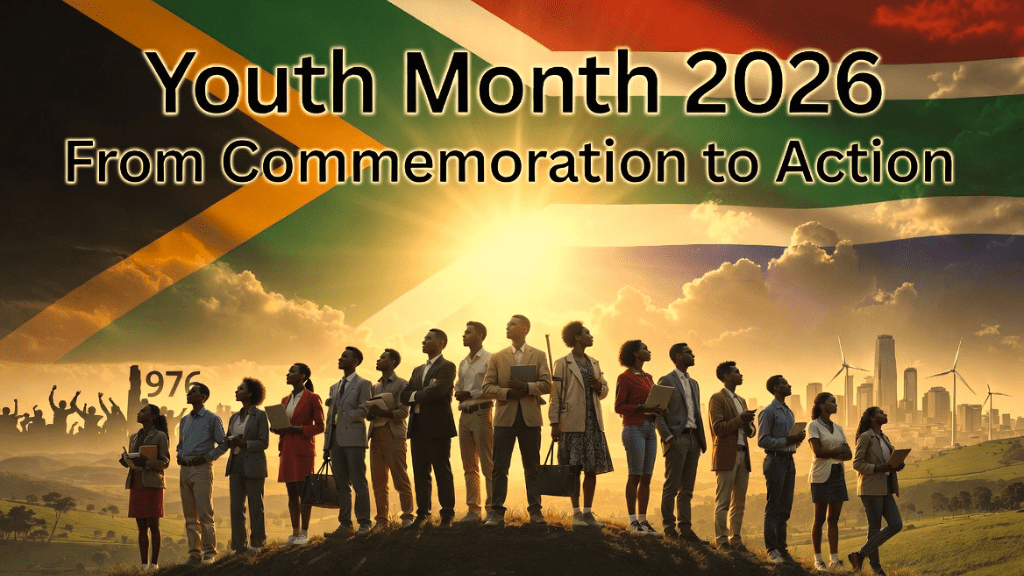
Every June, South Africa pauses to honour the courage, sacrifice and determination of the young people of 1976. The youth of Soweto did not merely protest against an unjust education system; they challenged an entire system that sought to limit their potential and deny them their future.
Fifty years later, the question confronting our generation is different, yet equally urgent:
What will history say about the youth of 2026?
This year’s national call to make 2026 a “Year of Action” for South African youth challenges us to move beyond remembrance and toward meaningful participation in building our country. While we celebrate the gains of democracy, we must also confront the realities facing millions of young South Africans today: unemployment, poverty, inequality, limited access to opportunities, and a growing sense of exclusion from the mainstream economy.
The latest Statistics South Africa Quarterly Labour Force Survey paints a sobering picture. South Africa’s unemployment rate increased to 32.7% in the first quarter of 2026, while 37.6% of young people aged 15 – 24 are not in employment, education, or training (NEET). Nearly four million discouraged work-seekers have lost hope of finding employment, while overall labour underutilisation continues to rise.
These figures are not merely statistics.
They represent dreams deferred, talent wasted, aspirations postponed, and potential left untapped.
Yet, despite these challenges, Youth Month should not be a month of despair. It should be a month of possibility.
South Africa’s youth remain our greatest strategic asset. Across industries such as finance, technology, renewable energy, mining, agriculture, manufacturing, healthcare, logistics, entrepreneurship, and the creative economy, new opportunities continue to emerge. The challenge is not that opportunities do not exist; rather, the challenge is ensuring that young people possess the skills, networks, resources, and support systems needed to access them.
But as we reflect on our own circumstances, it is important that we also look beyond our borders.
One of the defining features of the modern world is that young people are more connected than any generation before them. Through technology, travel, and globalisation, we are constantly exposed to how young people elsewhere are navigating the transition into adulthood.
What we discover is both encouraging and uncomfortable.
Across the world, young people face many of the same pressures that we do. International studies show that young people in countries such as the United States and Australia experience high levels of stress, burnout, uncertainty, and concern about the future. The pressures of adulthood are not unique to South Africa.
However, there is a fundamental difference.
Many of these societies have succeeded in creating systems that convert youthful energy into opportunity.
Young people in some of the world’s highest-performing countries consistently report greater confidence in their ability to find employment, stronger belief in their workforce skills, higher levels of preparedness for adulthood, and more optimism about the future. Countries such as Norway, Denmark, Finland, Iceland, and Switzerland continue to rank among the world’s leading nations in youth wellbeing, education, opportunity, inclusion, and participation.
These countries did not arrive there by accident.
They invested deliberately in quality education, skills development, innovation, entrepreneurship, social protection, research, technology, and youth participation. They built institutions that recognise young people not merely as future leaders, but as present-day contributors to society.
The lesson for South Africa is not that other countries are perfect. The lesson is that progress is possible.
We cannot afford to become comfortable with unemployment.
We cannot normalise dependency.
We cannot accept exclusion from economic participation as an unavoidable reality.
Most importantly, we cannot continue measuring ourselves only against our own circumstances.
We must measure ourselves against the best in the world.
If young people in Finland can build globally competitive skills, we can do the same.
If young people in Singapore can lead innovation and technological advancement, we can do the same.
If young people in Denmark can shape public policy and influence national development, we can do the same.
If young entrepreneurs in Silicon Valley can build businesses that transform entire industries, we can do the same.
The question is not whether South African youth possess the talent.
The question is whether we possess the urgency, discipline, resilience, and collective determination required to unlock that talent.
The truth is that South Africa has never lacked talented young people.
Our universities continue to produce exceptional graduates.
Our communities continue to produce innovators, entrepreneurs, professionals, academics, artists, athletes, and leaders of global calibre.
What we often lack is a shared national commitment to unlocking that potential at scale.
This is where youth empowerment becomes critical.
Empowerment is not merely about creating programmes for young people. It is about creating pathways into meaningful economic participation. It is about ensuring that young people are included in decision-making processes, equipped with relevant skills, connected to opportunities, and empowered to shape solutions to the challenges they face.
For the Black Management Forum Student Chapter, this mission remains central to our existence.
Since its inception, the BMFsc has served as a platform for leadership development, academic excellence, economic transformation, and professional empowerment. Our responsibility is not simply to prepare students for graduation; it is to prepare them for leadership in boardrooms, institutions, communities, and society at large.
We must continue building bridges between students and industry.
We must strengthen mentorship programmes.
We must create networking opportunities.
We must expose students to emerging industries and future-focused careers.
We must champion entrepreneurship, innovation, and economic participation.
Most importantly, we must inspire young people to see themselves not as victims of circumstance, but as active participants in shaping South Africa’s future.
The generation of 1976 fought for the right to learn.
The generation of 2026 must fight for the right to lead.
We must fight for the right to innovate.
We must fight for the right to build enterprises.
We must fight for the right to create jobs.
We must fight for the right to transform institutions.
We must fight for the right to compete globally and confidently take our place amongst the world’s best.
The youth of 1976 refused to accept the limitations imposed upon them.
The youth of 2026 must refuse to accept unemployment, inequality, mediocrity, and exclusion as permanent features of our society.
This Youth Month, let us move beyond commemoration. Let us become the generation that transforms remembrance into action, frustration into innovation, challenges into opportunities, and potential into achievement. Let us become the generation that refuses to be defined by statistics and instead chooses to define the future. The future of South Africa will not be built for young people. It will be built by young people. And the time to act is now and commemoration. Let us become the generation that transforms remembrance into action, frustration into innovation, challenges into opportunities, and potential into achievement. Let us become the generation that refuses to be defined by statistics and instead chooses to define the future. The future of South Africa will not be built for young people. It will be built by young people. And the time to act is now.
About the Author
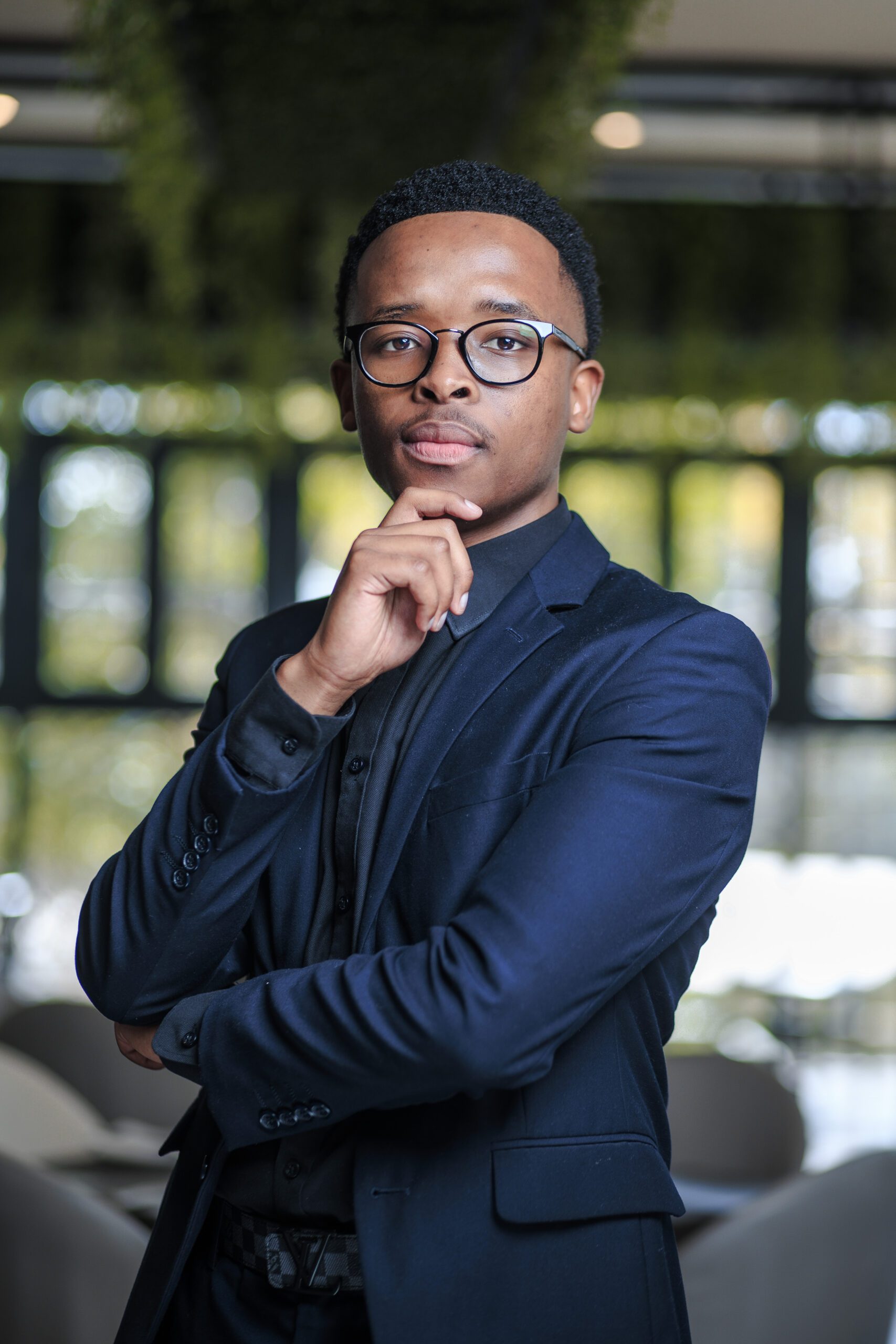
Richard Molefe is the National Chairperson of the Black Management Forum Student Chapter (BMFsc), where he works to advance economic transformation, entrepreneurship, and leadership development among young South Africans.
He is the Co-Founder and CEO of CartZA, a student-centred tech startup connecting students with affordable food, local merchants, and campus services. Currently pursuing an Honours degree in Finance at the University of the Free State, Molefe has gained international exposure through the prestigious Ernst Mach Scholarship.
Passionate about youth empowerment, he believes South Africa’s future depends on equipping young people to become empowered, innovative, and active participants in the economy.



Responses