
THE BLACK MANAGEMENT FORUM: REFLECTION AND PERSPECTIVE


The Black Management Forum is often described as an organisation. That description, while accurate, is incomplete.
The BMF is better understood as a response—one shaped in 1976 under conditions where exclusion was not incidental, but systemic. It emerged at a moment when Black professionals were denied both visibility and voice within the economy, and where participation in management was neither assumed nor accommodated.
Its formation signalled more than institutional intent. It marked the beginning of a deliberate effort to prepare Black professionals not only to enter the mainstream of economic life, but to influence and shape it.
The BMF arose as a defiant flame, declaring: We too shall lead. We too shall manage. We too shall shape the destiny of this nation.
Origins, Leadership and Institutional Identity
At its helm stood Eric Mafuna, the founding president—a man who understood that the exclusion of Black professionals from management was not merely unjust; it was unsustainable. He and his compatriots resolved to create a platform where Black voices could be heard, Black talent nurtured, and Black leadership prepared for the boardrooms of tomorrow.
Born of necessity.
Born of courage.
Born of vision.
Through the 1980s, the Forum became a sanctuary for Black professionals—a place where ideas were sharpened and solidarity forged. With the dawn of democracy in the 1990s, under Wiseman Nkuhlu, the first Black Chartered Accountant in South Africa, the BMF gained credibility and gravitas. He insisted that transformation must be anchored in excellence, and that representation must be matched by competence.
Then came Lot Ndlovu—a man of vision, intellect and courage. His presidency coincided with the democratic transition. He championed Black Economic Empowerment, ensuring that the BMF was not a bystander, but a participant in shaping the economic architecture of a new South Africa.
The BMF has been blessed with leaders who understood that leadership is not about titles, but about stewardship. From Bheki Sibiya to Nolitha Fakude, from Mzwanele Manyi to Bonang Mohale, each brought their own cadence, their own emphasis, and their own contribution.
What united these leaders was not uniformity of style, but a shared commitment to repositioning Black professionals as shapers of economic power.
The BMF was conceived not as a club, but as a crusade. Its core purpose was clear:
- To challenge exclusionary corporate structures
- To equip Black professionals with tools of excellence and authority
- To transform the boardroom into a space of justice and inclusivity
It was, in essence, business as activism—a reminder that economic liberation is inseparable from political freedom.
A strategist of rare vision, Eric Mafuna understood that protest alone was insufficient. He insisted on professional mastery, on intellectual preparation, and on the cultivation of Black managers who could not only enter the boardroom, but command it with competence and confidence.
His legacy is the seed from which the BMF’s tree grew.
Legacy and Institutional Reflection
The BMF’s legacy is profound. It created a community of thought leaders who dared to imagine a South Africa where Black professionals were not tokens, but torchbearers of transformation.
It insisted that transformation was not about numbers alone, but about ethics, stewardship and substance. It became a golden thread in our national tapestry—binding activism with professionalism, protest with policy, and vision with execution.
These stalwarts were not merely leaders; they were architects of a new corporate consciousness:
- Don Mkhwanazi: The strident president whose voice thundered against complacency, demanding economic justice with uncompromising zeal.
- Lot Ndlovu: The transformation champion who reminded us that change must be systemic, not cosmetic.
- Reuel Khoza: The intellectual exponent, weaving African wisdom—Ubuntu, Botho—into global governance, insisting that leadership is stewardship, not dominion.
- Nolitha Fakude: The gender trailblazer who shattered ceilings and affirmed that no liberation is complete if half the sky—our women—are excluded.
Whither BMF?
Today, we must ask: Whither BMF?
The context has shifted. The challenges have evolved.
- The challenge is no longer apartheid exclusion, but persistent inequality, youth unemployment and digital disruption.
- The greatest risk is not opposition, but irrelevance.
- The opportunity, however, remains immense:
- To reclaim its role as a moral compass in corporate governance
- To champion Pan-African leadership models
- To bridge the gap between activism and boardroom strategy
The BMF must once again become the Due North for ethical leadership—reminding us that transformation is a journey, not a destination.
Closing Thought
A tree without roots cannot stand. The BMF’s roots are deep planted in struggle, watered by sacrifice, and nourished by visionaries. Its branches must now reach higher, embracing new generations, new challenges, and new horizons.
As the African proverb teaches: Umuntu ngumuntu ngabantu—a person is a person through other people.
The BMF must continue to be the people’s forum, the people’s voice, and the people’s conscience in the corridors of power.
Let us then recommit to the vision of Eric Mafuna and the stalwarts who followed him. Let us ensure that the BMF remains not only a forum of managers, but a movement of leaders—leaders who embody substance, inclusiveness, quiet authority, boldness, and legacy.
Leaders who understand that stewardship is sacred, and that transformation must remain our Due North.
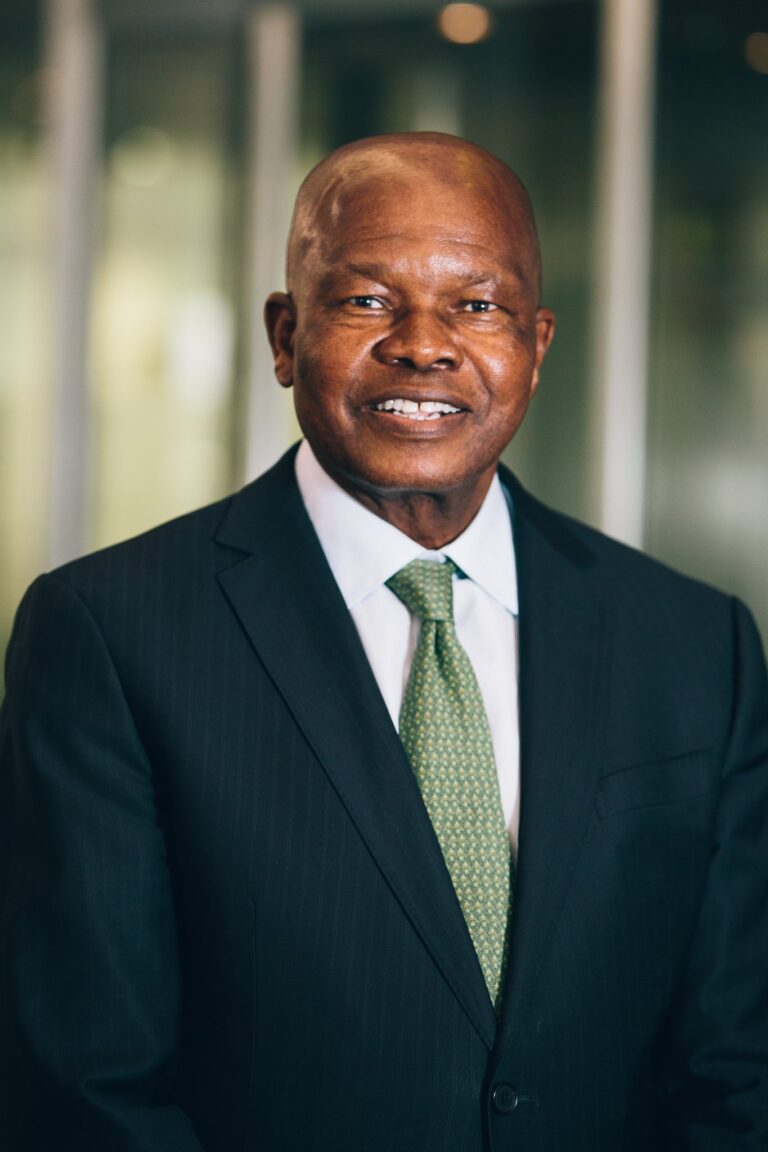
About the Author
Dr Reuel J Khoza
He is a highly distinguished South African business leader, academic, and author. He is widely recognised for his pioneering advocacy of Ubuntu within the realms of corporate governance and leadership.




Responses