Give to Gain: Why Women’s Economic Power Is South Africa’s Next Leadership Test

International Women’s Day must move beyond recognition toward the deliberate redistribution of economic power, opportunity and leadership.
International Women’s Day (IWD), observed annually on 8 March, is more than a symbolic moment of recognition. It is an opportunity to confront a fundamental question: how far have institutions truly moved from acknowledging women’s contributions to sharing economic power and leadership? While the day celebrates the progress made toward gender equality, it also exposes the persistent structural barriers that continue to shape the lives of women and girls across the world.
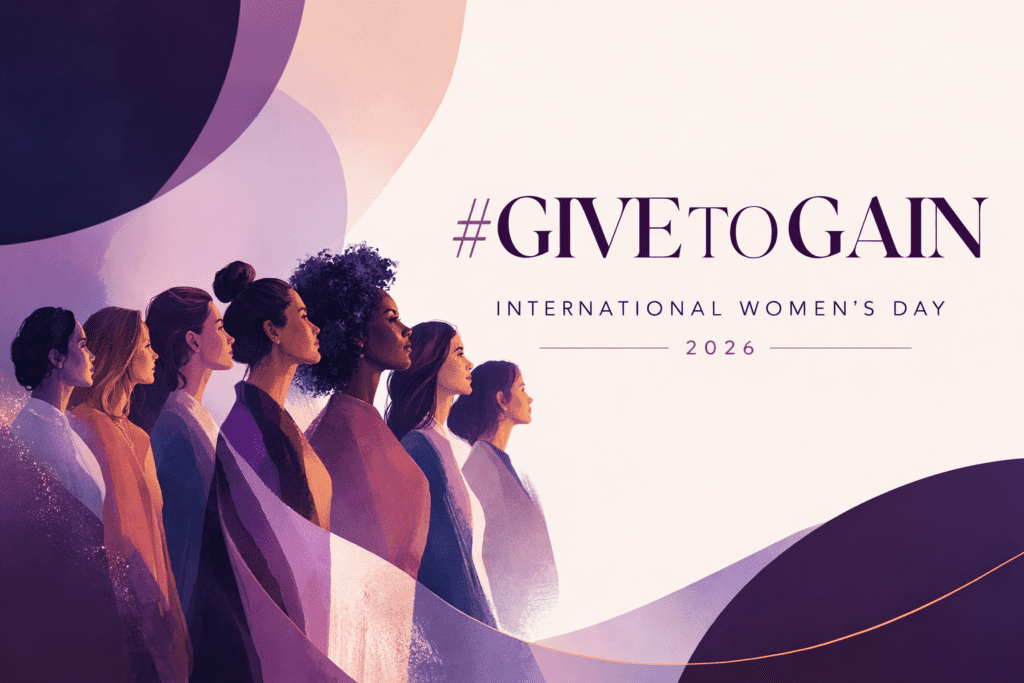
The 2026 theme, “Give to Gain,” brings this challenge into sharp focus. It moves the conversation beyond celebration and asks whether those who hold influence in government, business and public institutions are prepared to open pathways to ownership, capital and decision-making. At its core, the theme reframes gender equality not as an act of goodwill, but as a deliberate leadership choice about who is given access to opportunity, power and economic participation.
In a South Africa still marked by deep inequality, unemployment and gender-based violence, recognition without access is not enough. Equality cannot be advanced by symbolism alone. It accelerates when economic power, leadership pathways and decision-making opportunities are intentionally opened. When women gain economic agency, the benefits extend beyond individuals; they strengthen families, communities and the broader economy.
Inequality Is Structural, Not Accidental
International Women’s Day is rooted in the long struggle for gender equality and the recognition that women’s rights are human rights. These rights include the right to live free from violence, to access education and healthcare, to participate meaningfully in economic life, and to be represented in leadership and governance structures. Despite important gains in policy and legislation, these rights remain unevenly realised.
Across the world, women continue to be underrepresented in senior leadership and decision-making roles, while gender pay gaps and occupational segregation persist. These outcomes are not the result of individual failure or lack of ambition. They are the product of systems that concentrate capital, networks and influence while excluding women, particularly Black women, from economic power.
The consequences of this exclusion are visible not only in economic disparities but also in social vulnerability. According to the United Nations Office on Drugs and Crime, approximately 50 000 women and girls worldwide were killed between 2023 and 2024 by intimate partners or family members, accounting for nearly 60 per cent of all intentional homicides of women and girls. These figures point to more than criminal acts; they reveal deep-rooted inequality, economic dependence and power imbalances.
South Africa’s reality is especially stark. South African Police Service statistics show that between April 2023 and March 2024, 5 578 murders were recorded, including 1 656 children. More recent data indicate that between January and March 2025, 966 women and 314 children were murdered. These are not abstract numbers. They represent lives lost within homes and communities, often in spaces meant to provide safety.
While these statistics establish urgency, they cannot be the centre of our response. A narrative focused solely on crisis risks positioning women only as victims rather than as economic actors and leaders. Addressing gender inequality requires confronting the structural conditions that allow exclusion and vulnerability to persist.
Economic Power, Leadership and the Responsibility to Act
Gender inequality cannot be solved through law enforcement alone. Safety without economic agency is fragile, and rights without ownership remain incomplete.
Evidence consistently shows that women who lack access to stable income, capital and leadership pathways face heightened vulnerability and limited ability to leave unsafe environments. Economic dependence narrows choices and reinforces silence. Without agency, protection remains temporary.
“Give to Gain” therefore calls for a shift from reaction to prevention. Economic agency is not secondary to safety; it is fundamental to it. When women are economically independent, professionally visible and institutionally supported, their capacity to exercise choice, resilience and autonomy is strengthened.
For South Africa, this requires confronting an uncomfortable truth: gender equality will remain elusive unless women are fully integrated into the economic mainstream — not only as employees, but as owners, leaders and decision-makers.
Corporate South Africa plays a decisive role in shaping economic outcomes, leadership pipelines and access to opportunity. With this influence comes responsibility. Giving, in this context, is not charity. It is structural generosity — the intentional redistribution of access, influence and opportunity.
This includes active sponsorship of Black women into executive and board roles beyond informal encouragement; deliberate procurement and supply-chain access for women-owned enterprises; opening capital, networks and decision-making spaces historically closed to women; and intentional leadership pipeline development linked to succession planning and governance.
Research consistently shows that organisations with diverse leadership structures demonstrate stronger governance, improved risk management and better long-term performance. When institutions give women access to economic power, they do not weaken themselves; they strengthen their sustainability and competitiveness. In this moment, giving is not generosity of sentiment. It is sound economic strategy.
A transformation agenda without mentorship is unsustainable. If today’s leaders do not intentionally open networks, share power and sponsor emerging women leaders into strategic positions, inequality simply reproduces itself.
The “Give to Gain” theme places mentorship at the centre of progress. Yet mentorship cannot remain informal or optional. It must be embedded within institutional design and linked to measurable outcomes. For Black managerial leadership, this is an intergenerational responsibility. Progress cannot depend on chance encounters or personal goodwill. It requires formal mentorship and sponsorship programmes, executive accountability for developing women into decision-making roles, and collaboration ecosystems that build collective competence with clear pipelines leading to executive and board representation.
The future of women’s leadership will not happen by accident. It must be deliberately engineered.
A Leadership Test for the Future
International Women’s Day remains a powerful moment of reflection and collective accountability. It calls on governments, institutions, civil society and corporate leaders to assess not only the progress achieved but the structural gaps that remain. Yet its true impact is determined by what follows after the commemorations end.
“Give to Gain” is ultimately a leadership test. It asks whether influence will be protected or converted into opportunity. When mentorship becomes institutional, when procurement becomes inclusive, and when leadership pipelines are intentionally designed, transformation accelerates. In giving women economic power, we gain a stronger, more competitive and more just economy.
Gender equality will not be sustained by goodwill alone; it will be secured by design. Corporate South Africa and those who occupy positions of executive and managerial authority therefore carry a direct responsibility. Transformation cannot be delegated to policy documents, task teams or compliance functions alone. It lives in the decisions made by chief executives, board chairs, executive committees and senior managers who control capital allocation, procurement decisions and leadership pipelines.
Managerial leadership is not a peripheral actor in transformation; it is the lever. Every promotion decision, succession plan, procurement choice and mentorship commitment either accelerates or delays equality.
“Give to Gain” therefore asks a final question of leadership: will influence be accumulated, or will it be used to open opportunity?
When institutions choose the latter, the return is clear: a stronger economy, deeper leadership capacity and a more just society.
Transformation will not happen by chance. It will be delivered by design.

About the Author
Karabo Ceke is a Bachelor of Social Sciences graduate with majors in Sociology and Psychology. Passionate about social development and organizational
dynamics, Karabo is currently a member of the Thought Leadership, Research, and Programmes department at the Black Management Forum, where they contribute to initiatives that promote leadership and transformation in the corporate space.
With a strong foundation in human behaviour and social structures, Karabo aims to drive meaningful change in the professional and societal landscape.





Responses